
Reconhecimento e Identificação: A Constituição do Sujeito na Dialética Hegeliana e no Estágio do Espelho Lacaniano
Palavras-chave:
Reconhecimento; Identificação; Subjetividade; Hegel; Lacan.Resumo
ResumoO estudo analisa a constituição do sujeito a partir da articulação entre a dialética hegeliana do reconhecimento e o estádio do espelho lacaniano. Por meio de revisão sistemática em bases indexadas (SciELO, PubMed, PsycINFO, Philosopher’s Index), foram incluídos artigos de 2020 a 2025 que abordam processos de identificação, alienação e subjetividade. Os resultados demonstram que a alienação atua como força estruturante na formação do eu, instaurando defesas narcisistas e identificações secundárias que sustentam a coesão psíquica. A convergência entre Hegel e Lacan permite compreender o reconhecimento como processo simbólico e imaginário, mediado por relações de poder, linguagem e alteridade. Conclui-se que a integração entre filosofia e clínica psicanalítica enriquece a leitura das dinâmicas de luto, resistência e reconstrução subjetiva, com implicações éticas e terapêuticas.
Referências
REFERÊNCIAS
Ambra, P., & Paulon, C. P. (2024). Registros políticos do sofrimento: Identidade, trauma e transformação. Revista Latinoamericana de Psicopatologia Fundamental, 27, e230967.
Andrade, P. (2023). A questão do reconhecimento: Fanon e a dialética hegeliana. In Literatura, decolonialidade e trânsitos: Guiana Francesa e Suriname (p. 105). Editora UFRJ.
Da Silva, A. W. C., et al. (2022). A teoria do desejo em Lacan como crítica ao realismo ingênuo do eu. Revista Subjetividades, 22(3).
Dias, L. S., & Canavêz, F. (2022). Complexo de Édipo e diferença racial em psicanálise. Revista Subjetividades, 22(3), e12545.
Dutra, V. (2024). A economia restrita do falo: Crítica derridiana à teoria sexual de Lacan. Princípios: Revista de Filosofia, 31(66), 3.
Kehl, M. S., & Fortes, M. I. (2021). Do liame entre imaginário e violência: Desenlaces no corpo. Revista Subjetividades, 21(3), e9305.
Lemke, R., Ravanello, T., & Costa, M. (2021). O problema da ontologia na psicanálise lacaniana. Tempo Psicanalítico, 53(2).
Maeso, B. E. (2024). “Pais e filhos”: A recepção de Hegel nas filosofias francófilas no século XX. DoisPontos, 21(3).
Penna, P. D. M., & Pimenta, C. G. (2024). A importância do processo de alienação na constituição do sujeito. Caderno Pedagógico, 21(10), e9340.
Reis, V. A. W., et al. (2023). Considerações sobre o trabalho do analista com o autismo a partir da psicanálise lacaniana. Tempo Psicanalítico, 55, 432–466.
Scarano, R. C. V., & Pertile, G. H. (2021). A questão da identificação e sua relação com a alteridade em Jacques Lacan. Analytica: Revista de Psicanálise, 10(19), 1–21.
Silva, P. C. A. (2024). A questão do reconhecimento: Fanon e a dialética hegeliana. Via Atlântica, 25(1), 160–188.
Spak, G. C. (2021). Sujeito e saber em Hegel e em Lacan: Entre a certeza do significado e a verdade do interdito. Revista PsicoFAE: Pluralidades em Saúde Mental, 10(2), 41–52.
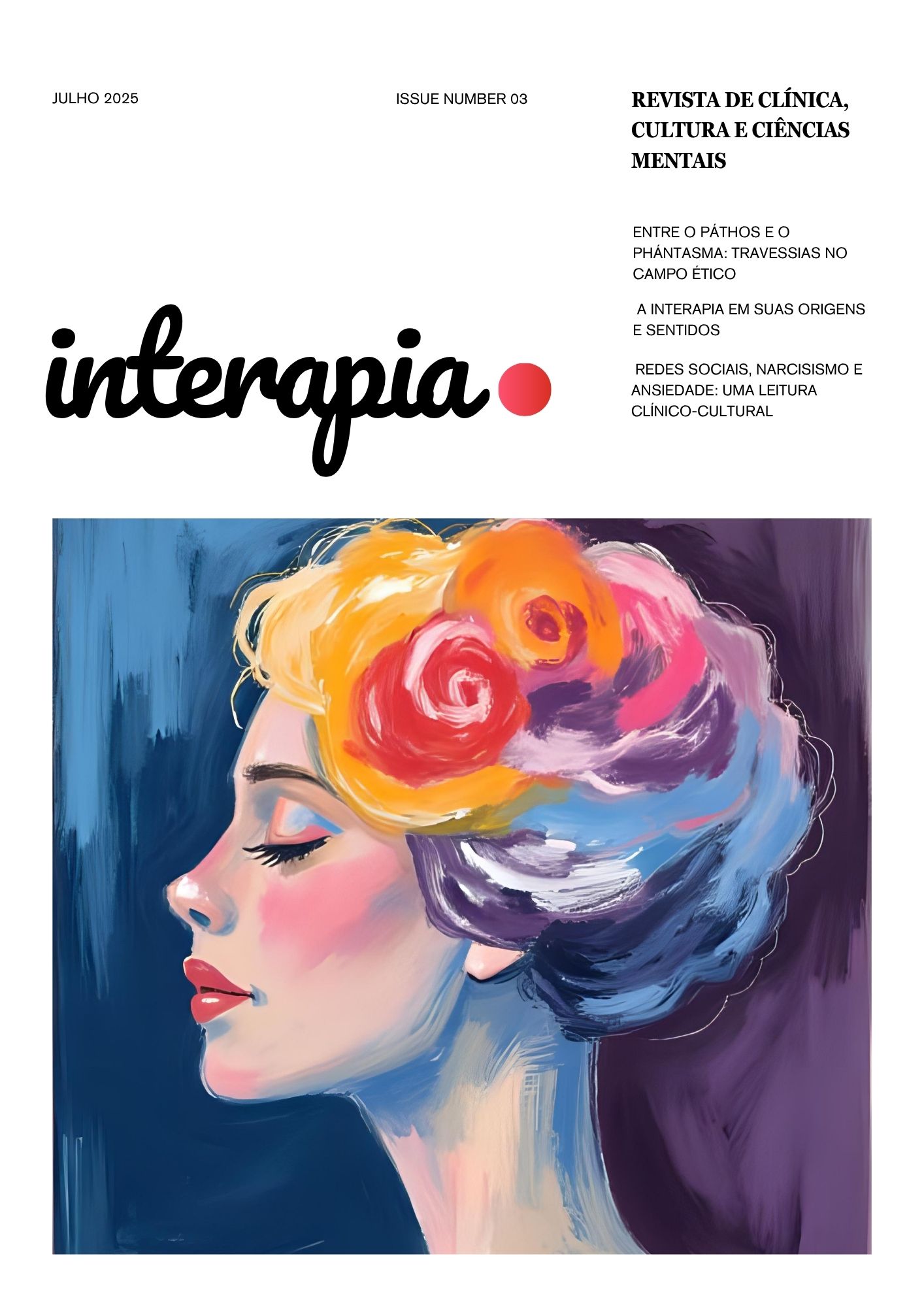
Publicado
Declaração de Disponibilidade de Dados
Declaro que este manuscrito é inédito, não foi submetido a outra revista e respeita princípios éticos de pesquisa e publicação científica.
Edição
Seção
Categorias
Licença

Este trabalho está licenciado sob uma licença Creative Commons Attribution-NonCommercial 4.0 International License.
Termos da Licença
Todos os artigos publicados na Interapia – Revista de Clínica, Cultura e Ciências Mentais estão licenciados sob a:
Licença Creative Commons Atribuição-NãoComercial 4.0 Internacional (CC BY-NC 4.0)
Isso significa que os autores mantêm os direitos autorais sobre suas obras e concedem à revista o direito exclusivo de primeira publicação, permitindo que terceiros compartilhem, distribuam e reutilizem o conteúdo, desde que:
Seja atribuída autoria apropriada, com citação clara da revista e dos autores;
O uso seja exclusivamente não comercial;
Em caso de adaptações ou transformações, a fonte original seja igualmente mencionada.
É expressamente vedado o uso comercial do conteúdo sem autorização prévia e por escrito dos autores e da equipe editorial da revista.
Citação recomendada:
SOBRENOME, Nome. Título do artigo. Interapia – Revista de Clínica, Cultura e Ciências Mentais, v. X, n. Y, p. XX–XX, mês/ano.
Disponível em: [link para o artigo].
Licenciado sob CC BY-NC 4.0.