
A formação do ego no Estádio do Espelho: a construção da identidade na psicanálise lacaniana
Palavras-chave:
Lacan; ego; identidade; Estádio do Espelho; psicanáliseResumo
ResumoO artigo investiga o processo de formação do ego segundo a teoria lacaniana do Estádio do Espelho, articulando-o com a construção da identidade do sujeito. A partir da releitura de textos fundamentais de Freud e Lacan, o estudo analisa a gênese do ego como estrutura imaginária e suas implicações na constituição da subjetividade. A autora demonstra que, para a psicanálise lacaniana, o ego é produto de uma identificação alienante, fundada sobre a imagem do outro e a experiência de falta. Tal concepção rompe com as noções clássicas de um “eu” autônomo, revelando o sujeito dividido e atravessado pela linguagem. Conclui-se que compreender o Estádio do Espelho é fundamental para o trabalho clínico, pois permite reconhecer a dimensão simbólica e o caráter ficcional da identidade humana.
Referências
Freud, S. (1900/1996). A interpretação dos sonhos (Obras completas, Vols. IV–V). Rio de Janeiro: Imago.
Freud, S. (1923). O Ego e o Id. Obras completas, Vol. XIX Freud, S. (1923/1996). O ego e o id (Obras completas, Vol. XIX). Rio de Janeiro: Imago.
Lacan, J. (1949). O Estádio do Espelho como Formador da Função do Eu. In: Escritos. Rio de Janeiro: Zahar, 1998. Lacan, J. (1949/1998). O estádio do espelho como formador da função do eu. In Escritos (pp. 93–103). Rio de Janeiro: Zahar.
Lacan, J. (1964/1992). Os quatro conceitos fundamentais da psicanálise. Rio de Janeiro: Zahar.
Lacan, J. (1958–1959/2016). O seminário, livro 6: O desejo e sua interpretação. Rio de Janeiro: Zahar.
Safatle, V. (2010). O circuito dos afetos: Corpos políticos, desamparo e o fim do indivíduo. São Paulo: Cosac Naify.
Roudinesco, E. (1997). Jacques Lacan: Esboço de uma vida, história de um sistema de pensamento. Rio de Janeiro: Zahar.
Žižek, S. (2008). Como ler Lacan. São Paulo: WMF Martins Fontes.
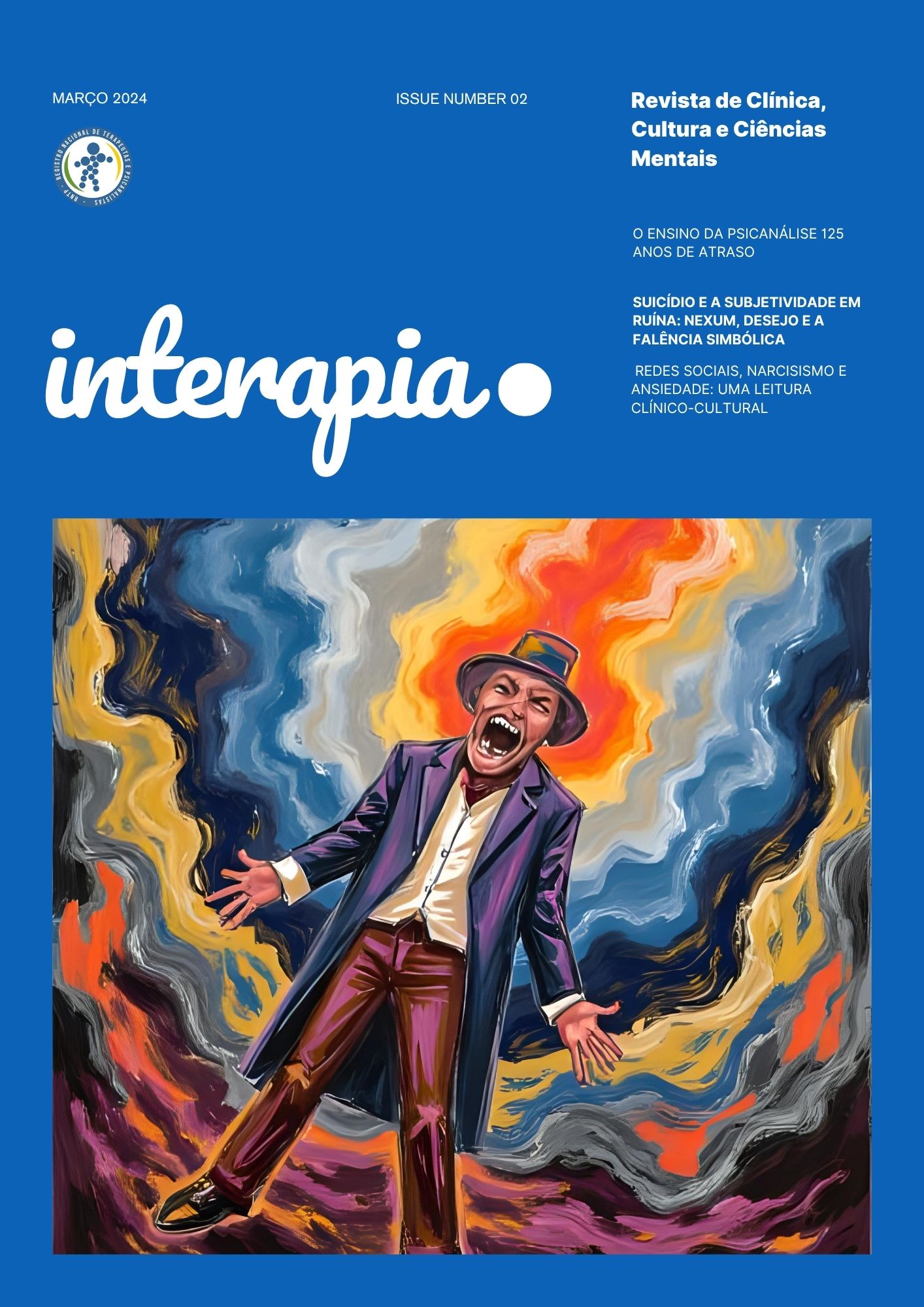
Publicado
Declaração de Disponibilidade de Dados
Declaro que este manuscrito é inédito, não foi submetido a outra revista e respeita princípios éticos de pesquisa e publicação científica.
Edição
Seção
Categorias
Licença

Este trabalho está licenciado sob uma licença Creative Commons Attribution-NonCommercial 4.0 International License.
Termos da Licença
Todos os artigos publicados na Interapia – Revista de Clínica, Cultura e Ciências Mentais estão licenciados sob a:
Licença Creative Commons Atribuição-NãoComercial 4.0 Internacional (CC BY-NC 4.0)
Isso significa que os autores mantêm os direitos autorais sobre suas obras e concedem à revista o direito exclusivo de primeira publicação, permitindo que terceiros compartilhem, distribuam e reutilizem o conteúdo, desde que:
Seja atribuída autoria apropriada, com citação clara da revista e dos autores;
O uso seja exclusivamente não comercial;
Em caso de adaptações ou transformações, a fonte original seja igualmente mencionada.
É expressamente vedado o uso comercial do conteúdo sem autorização prévia e por escrito dos autores e da equipe editorial da revista.
Citação recomendada:
SOBRENOME, Nome. Título do artigo. Interapia – Revista de Clínica, Cultura e Ciências Mentais, v. X, n. Y, p. XX–XX, mês/ano.
Disponível em: [link para o artigo].
Licenciado sob CC BY-NC 4.0.